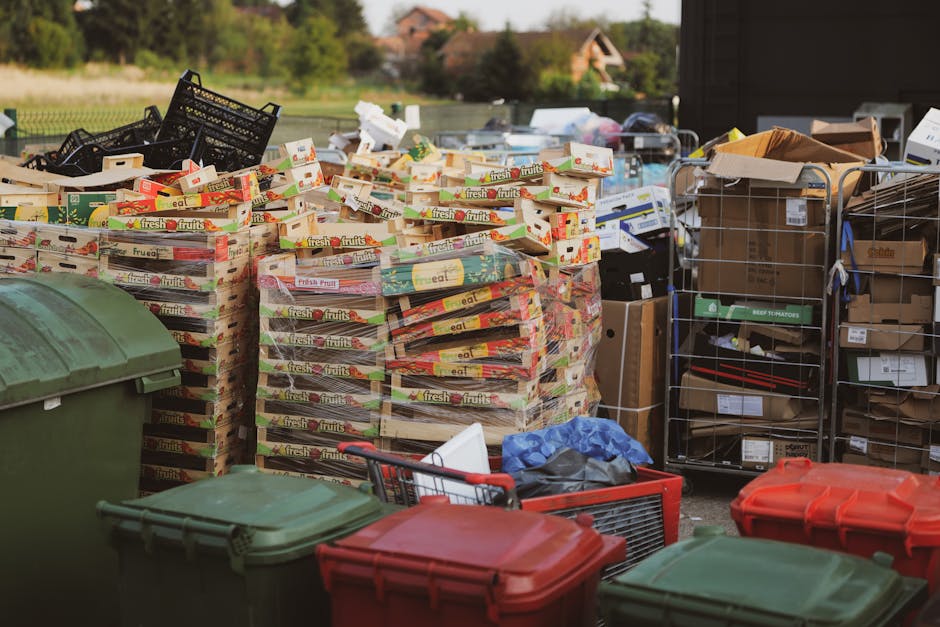
Bulk item collection in Haringey: what the council removes
If you've got a broken wardrobe leaning in the hallway, a sagging mattress in the spare room, or a dining table that's finally given up the ghost, you're probably wondering what happens next. Bulk item collection in Haringey: what the council removes is one of those local services people only think about when the pile starts getting in the way. And fair enough - bulky waste is awkward, heavy, and often too much for a normal bin day.
This guide explains what the council usually removes, what it won't take, how the process tends to work, and when a private option may be the better fit. You'll also find practical tips for preparing items, avoiding rejected collections, and choosing the cleanest, least stressful route. Let's face it, nobody wants to drag a sofa to the front path twice.
Table of Contents
- Why bulk item collection matters
- How the council collection process works
- Key benefits and practical advantages
- Who it is for and when it makes sense
- Step-by-step guidance
- Expert tips for better results
- Common mistakes to avoid
- Tools, resources and recommendations
- Law, compliance, standards, or best practice
- Options, methods, or comparison table
- Case study or real-world example
- Practical checklist
- Conclusion
- Frequently asked questions
Why Bulk item collection in Haringey: what the council removes Matters
Bulk collection matters because bulky items are not just "more rubbish". They're awkward to store, difficult to move safely, and easy to get wrong when you're trying to dispose of them quickly. A single mattress, wardrobe, or old fridge can take up half a landing. In a flat share or family home, that turns into a daily annoyance fast.
There's also a wider practical side. Leaving bulky items in hallways, front gardens, or communal areas can create obstruction and fire-safety issues. In shared buildings, it can lead to complaints from neighbours or managing agents. And if you're moving house, clearing a property, or emptying a rented flat, the timing can be tight. Suddenly, the question isn't "should I deal with this?" but "how quickly can I do it properly?"
For many residents, the council route is the first place to look because it's familiar and usually designed for domestic use. But what the council removes depends on the item type, condition, and local collection rules. Knowing that upfront saves time and stops disappointment on collection day.
Practical takeaway: the best bulky waste plan is the one that matches the item, the deadline, and the access you actually have - not the one that sounds easiest at first glance.
How Bulk item collection in Haringey: what the council removes Works
In most cases, council bulk collection is a booked service for household items that are too large for normal bins. You arrange a slot, put the approved items out in the required place, and the collection team removes them if they meet the service rules. Simple enough on paper. In real life, the details matter.
The council will usually expect items to be ready for collection in a safe, accessible spot. That often means outside the property boundary, at ground level, and not blocking pavements or shared entrances. If you live in a flat, the instructions may be more specific, because access and shared responsibility matter more in communal buildings. A bulky item stuck behind a locked gate is nobody's idea of a smooth morning.
What gets removed can vary, but the general idea is domestic bulky waste only. Think furniture, mattresses, large household items, and similar objects that cannot go in standard bins. Items contaminated with hazardous materials, heavily dismantled waste, or trade waste usually fall outside the service. When in doubt, check item by item rather than assuming the whole pile qualifies.
If your collection includes a mix of furniture and household clutter, it can help to separate categories before booking. For example, a sofa may be accepted while loose bags of rubble or paint tins are not. That small bit of sorting often prevents rejection later.
For households dealing with furniture clearance during a move, a dedicated service such as furniture pick-up support can be a practical alternative when you need more flexibility than a council slot allows. Similarly, if the clear-out is happening alongside a bigger relocation, services like home moves or house removalists can help keep everything moving in one direction instead of three.
Key Benefits and Practical Advantages
Bulk item collection sounds basic, but the benefits are more useful than people often expect. First, it gets large waste out of the home without you needing a van, lifting gear, or a Saturday spent wrestling with upholstery and dust. That alone is a relief.
Second, it can reduce trip hazards and clutter. If you've ever tried to squeeze past a dismantled bed frame in a narrow London hallway, you know what I mean. The space suddenly feels smaller, noisier, and more annoying than it should.
Third, it can support a smoother move, tenancy handover, renovation, or declutter. A cleared room is easier to clean, photograph, or re-use. That matters whether you are preparing a sale, ending a tenancy, or just trying to reclaim the spare room for something useful again.
There is also a decision-making benefit: once you understand what the council removes, you stop wasting time on items that need a different route. That makes planning easier and cuts down on last-minute panic. Truth be told, bulky waste rarely becomes less urgent if you ignore it for a week.
- Less lifting and manual handling for you and your household
- Fewer obstructions in hallways, gardens, and shared spaces
- Better timing for end-of-tenancy and moving-day prep
- Cleaner, more organised rooms for redecorating or storage
- Less uncertainty about disposal when item categories are clear
Who This Is For and When It Makes Sense
This service is most useful for residents who have one or more oversized household items and want a straightforward disposal route. That includes people clearing a flat, replacing old furniture, managing a bereavement property, or dealing with items that simply won't fit in a standard bin system.
It also makes sense for landlords and tenants at the end of a tenancy, although they need to be careful about what is considered domestic waste versus leftover contents. If the property contains a lot of furniture, white goods, or mixed items, a more flexible removals option may be cleaner and faster.
Families often use bulky collection when children's beds, prams, wardrobes, or old garden furniture have become unusable. Older residents may need help when moving a heavy item safely is no longer realistic. And if you're doing a bigger declutter after years in the same place, the service can be a tidy way to remove the "just in case" objects that have outstayed their welcome.
There are times when it is not the best fit. If you need same-day removal, have many items, or want help from inside the property rather than just kerbside collection, a private solution may be more practical. A man and van or man with van service is often used for this sort of job because it can include loading support, transport, and a bit more flexibility around access.
Step-by-Step Guidance
If you want the cleanest experience possible, treat bulky collection like a mini project rather than a quick favour. A little planning goes a long way.
- List every item you want removed. Write it down one by one. "Old furniture" is too vague; a sofa, armchair, mattress, and coffee table are much easier to assess.
- Check condition and category. Think about whether the item is ordinary household waste, electrical equipment, or something potentially restricted. Mixed piles cause the most trouble.
- Separate the accepted items from the doubtful ones. Keep the clear-cut items together so one rejected object doesn't complicate everything.
- Prepare access. Make sure gates, pathways, and shared entrances are usable. If the item has to come through a tight stairwell, measure first.
- Follow placement instructions closely. Put items where requested and at the right time. Don't leave them out days early; that can create mess and complaints.
- Take photos if the item is complex. This is especially useful for awkward furniture, damaged appliances, or anything you think might be queried later.
- Have a backup plan. If the council cannot take something, know your next move before collection day arrives.
One small but useful habit: do a final walk-through the evening before. You will spot the random ottoman, broken lampshade, or bits of dismantled shelving that somehow get forgotten until the last minute. Happens all the time.
Expert Tips for Better Results
In our experience, the best bulky waste outcomes come from reducing uncertainty. That means fewer mixed loads, fewer hidden items, and fewer assumptions.
First tip: keep hazardous or questionable items separate. Items with chemicals, sharp edges, gas cylinders, or contamination should never be lumped in with ordinary furniture. Even if something looks like a simple "bit of junk", it may need specialist handling. If you're not sure, assume it needs checking.
Second tip: dismantle only when it helps. A flat-pack wardrobe can be easier to move if it's broken down, but if dismantling turns it into a pile of sharp panels and loose fixings, you may make the job harder. There's no prize for overdoing the prep.
Third tip: match the method to the access. Ground-floor house? Council collection may be fine. Top-floor flat with no lift and a heavy divan base? You might save yourself a sore back by using a service with lifting help, such as moving truck support or removal truck hire alongside a handling team.
Fourth tip: think in terms of total load, not just number of objects. Two huge wardrobes can be a much bigger job than six smaller items. Weight, awkward shapes, and access matter more than people expect.
Fifth tip: keep communication simple. If you are booking through a private provider, describe the items plainly: "one double mattress, one three-seater sofa, one broken desk." Clear language saves time.
Common Mistakes to Avoid
The most common mistake is assuming every bulky item is automatically accepted. It isn't. Council services usually have boundaries, and those boundaries are there for a reason. If you ignore them, you risk a failed collection and another week of clutter staring at you from the hallway.
Another common slip is putting out items too early. That may seem harmless, but it can create obstruction, attract misuse, or annoy neighbours. In a dense street or shared block, timing really matters.
People also forget about access. A collection can only happen if the crew can get to the item safely. If the path is blocked by bikes, garden furniture, or a locked gate with no arrangement for entry, things get messy quickly.
And then there's the "one more item" problem. The pile starts as a sofa and mattress, then somehow becomes a broken chair, a rug, a printer, and a bag of mixed bits from under the stairs. Before you know it, the collection no longer matches the original plan.
- Assuming all electricals are accepted without checking
- Mixing household waste with bulky furniture
- Leaving items outside too early
- Ignoring access restrictions in flats or shared buildings
- Forgetting to separate salvageable items from waste
- Not having a fallback option if the council declines an item
Tools, Resources and Recommendations
You do not need fancy equipment for most bulky item prep, just a few practical basics. A tape measure helps if a sofa needs to pass through a doorway. Heavy-duty gloves are useful if an item has splinters, broken wood, or exposed metal. A trolley or sack barrow can help for short movements, though it is not always necessary.
Strong bin bags are handy for screws, brackets, and fixings if you dismantle furniture. Small labels or masking tape can also help if you are separating "remove" items from "keep" items in the same room. That sounds almost too simple, but it avoids confusion when the flat is half-packed and everyone is tired.
For bigger household moves or mixed clearances, it can help to look at practical support pages such as packing and unpacking services if you need help sorting rooms before disposal, or home moves if the bulky collection is only one part of a larger relocation plan.
If the job is commercial rather than domestic, the rules and logistics change again. Office furniture, filing cabinets, and mixed workplace waste are often better handled through commercial moves or office relocation services rather than a domestic-style collection approach.
Law, Compliance, Standards, or Best Practice
Bulk waste disposal is not just a convenience issue; it also touches on safety, access, and responsible waste handling. While the exact council rules are local and can change, the broad best practice is consistent across the UK: only present items that are allowed, keep routes clear, and avoid leaving waste where it obstructs public space or shared access.
For residents, the practical standard is simple. Do not assume that because something is large, it is automatically suitable for a bulky collection. Items that are hazardous, contaminated, or clearly outside domestic use may need a different disposal route. That includes materials that could harm collection crews if handled incorrectly. No one benefits from guesswork here.
If you live in a managed block, there may also be building-specific rules about shared areas, lift use, loading bays, or collection timings. These are not just admin details. They affect whether a collection is safe and whether neighbours are disrupted. A small delay can be better than a messy complaint, honestly.
Best practice also means keeping proof of what you arranged and what was collected, especially if you are clearing a rented property or handling an end-of-tenancy move. A quick photo before pickup can help if there is any later confusion.
Options, Methods, or Comparison Table
Choosing between the council and a private clearance option usually comes down to timing, item type, access, and how much help you need. Here is a straightforward comparison.
| Option | Best for | Advantages | Limitations |
|---|---|---|---|
| Council bulk collection | Few domestic bulky items with easy access | Suitable for simple clear-outs and routine furniture disposal | May have item restrictions, fixed timing, and access rules |
| Man and van service | Mixed household items or awkward access | More flexible and can include loading help | Needs direct booking and clear item descriptions |
| Removal truck hire | Larger loads or move-day clearances | Useful for substantial furniture and bigger clearance jobs | Can be more than you need for a single item |
| Furniture-focused pickup | Specific bulky furniture only | Ideal when the job is mostly sofas, beds, tables, or wardrobes | Less suitable for mixed waste streams |
As a rule of thumb, the more complex the access or the larger the load, the more useful a private collection becomes. If you only have one or two items and time is on your side, council collection may still be the neatest answer.
Case Study or Real-World Example
Imagine a Haringey flat where a tenant is moving out on a Friday afternoon. There is a broken double mattress in the bedroom, a wobbly wardrobe in pieces, and an old sofa that has seen better decades. The council route might be fine for the mattress and sofa if they fit the collection rules and timing works. But the dismantled wardrobe becomes the awkward part because it now sits as mixed timber panels, fixings, and possibly sharp edges.
In a situation like that, a resident may split the job. The accepted domestic bulky items go through the council, while the remainder is handled with a private pickup. That avoids one rejected item delaying the entire clearance. It is not glamorous, but it is efficient. And efficiency matters when the keys need to be handed back and the hallway still smells faintly of old carpet and dust.
We've seen this kind of split approach work well for people clearing a room after renovation too. They remove the simple items first, then use a more flexible service for the heavier pieces. It keeps stress down and stops the pile from growing overnight - which, somehow, it always does.
Practical Checklist
Before you book or place items out, run through this quick checklist.
- List each bulky item separately
- Check whether the item is domestic furniture, electrical, or potentially restricted
- Separate accepted items from questionable ones
- Measure doors, stairs, and access routes if movement is needed
- Confirm where the items must be left for collection
- Keep pathways, gates, and communal entrances clear
- Remove loose screws, glass, or dangerous protrusions if safe to do so
- Take a photo of the items before collection
- Have a backup plan for anything the council will not take
- Book enough time before your move-out or renovation deadline
If you can tick most of those boxes, the process becomes much calmer. Not perfect - rarely is - but definitely calmer.
Get a free quote today and see how much you can save.
Conclusion
Bulk item collection in Haringey is most useful when you know exactly what the council removes, what it is likely to refuse, and how to prepare the items properly. For straightforward domestic furniture and a small number of bulky pieces, it can be a practical, sensible solution. For larger, mixed, urgent, or access-heavy jobs, a private clearance option may save time and frustration.
The key is not to leave it until the last minute. Sort the items, check the rules, and choose the method that fits your situation rather than the one that feels easiest in the moment. A little planning now can spare you a lot of running around later, and that always feels good when the room is finally clear.
And once the bulky item is gone, the space changes. You notice the light again. You hear less clutter underfoot. It's a small win, but a real one.
Frequently Asked Questions
What does the council usually remove in a bulk collection?
Generally, councils remove larger household items such as furniture, mattresses, and other bulky domestic items that do not fit normal bins. Exact acceptance varies, so it is best to check the item type before booking.
Will the council take a sofa and mattress together?
Often, yes, if both items fit the service rules and access instructions are followed. The issue is usually not the combination itself, but whether each item is acceptable and ready for collection.
Does the council remove broken wardrobes or dismantled furniture?
Sometimes, but dismantled items can be trickier because they may need to be separated into safe, manageable parts. If the pieces create sharp edges or mixed waste, they may not be accepted as a simple bulky collection.
Can I leave bulky items outside the night before?
Usually, you should only place items out according to the collection instructions. Leaving them out too early can create obstruction, attract damage, or lead to complaints from neighbours.
What if the council will not take one of my items?
That is where a fallback plan helps. You may need a private clearance option, a furniture pickup service, or a different disposal route for restricted items.
Is bulky item collection suitable for flat clearances?
It can be, but access rules matter much more in flats. Shared entrances, stairwells, and lifts can change what is practical, so it is worth checking before you rely on the service.
How do I prepare items for collection?
Keep the items together, separate any loose fixings, clear the access route, and place them exactly where instructed. If safe, remove anything that could cause injury during handling.
Is a man and van better than council collection?
It depends on the job. A man and van service is often better when you need flexibility, help with lifting, or removal from inside the property. The council route may be enough for simpler domestic items.
What about office furniture or business waste?
That is usually better handled through a commercial removal service rather than a domestic bulky collection. Office items can involve different access, quantity, and disposal needs.
How far in advance should I plan a bulky collection?
As early as you can, especially if you have a move-out date or renovation deadline. Last-minute bookings are where the stress tends to pile up fast.
Can I use a furniture pickup service for just one item?
Yes, and that is often the sweet spot for it. If you only have a single sofa, wardrobe, or bed to remove, a focused furniture pickup can be more efficient than arranging a larger clearance.
What should I do if access is difficult?
Measure doors, stairwells, and paths before collection day, and consider a service that includes loading support if the item cannot be moved safely by hand. Difficult access is one of the main reasons people switch from council collection to a private option.